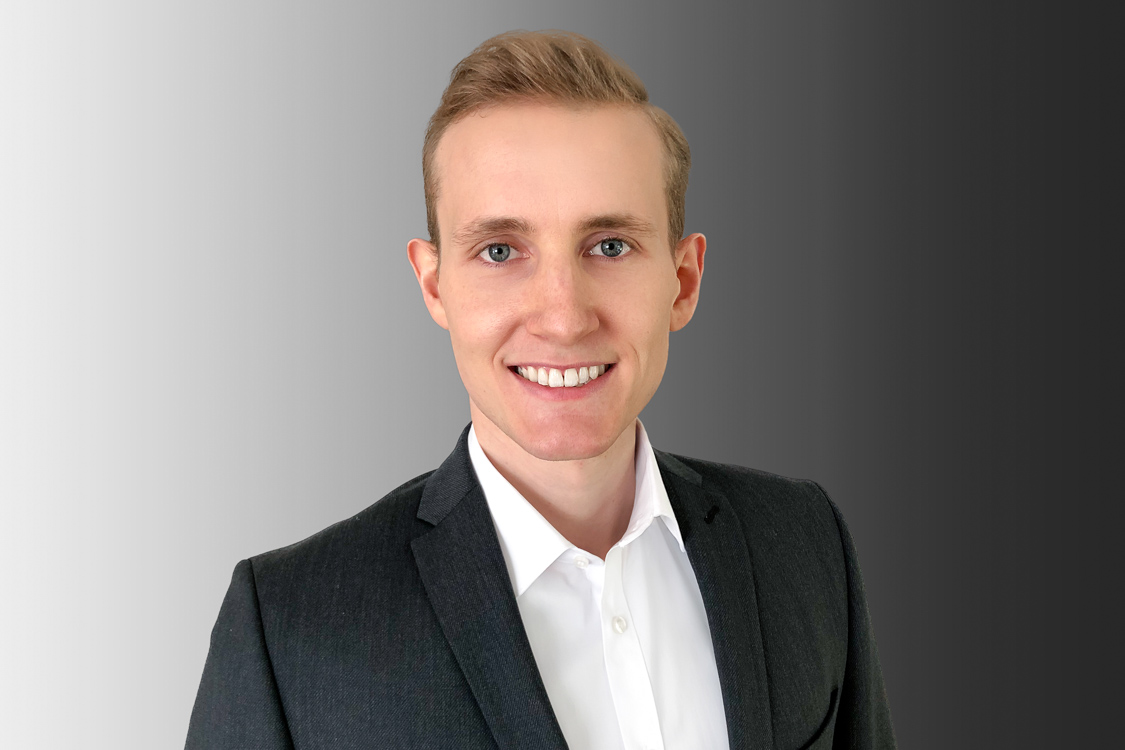
About me
I am a postdoctoral researcher at the Technical University of Berlin in the research group Differential Equations, led by Prof. Etienne Emmrich.
From March to September 2026, I was a Distinguished Fellow at George Mason University (Fairfax, VA, USA), hosted by Prof. Harbir Antil.
Previously, I held a postdoctoral position at the University of Freiburg, where I also completed my PhD under the supervision of Prof. Michael Růžička. From July 2023 to March 2024, I was a Walter Benjamin Fellow of the German Research Foundation (DFG) at the University of Pisa, working with Prof. Luigi C. Berselli on numerical methods for smart fluids.
Open position
We invite applications for a two-year, full-time postdoctoral position at WIAS Berlin within the MATH+ project DOC-TWIN, which I co-lead with Michael Hintermüller and Harbir Antil.
The project focuses on duality-based error control for PDE-constrained optimisation in digital-twin-based structural health monitoring. The position is scheduled to start on 1 January 2027, with remuneration according to TVöD Bund E13.
Please see the full job advertisement (reference 26/22) for details. Applications must be submitted through the WIAS application portal linked in the announcement.
Research profile
My research focuses on the numerical analysis of nonlinear PDEs and nonsmooth variational problems. I combine nonlinear functional analysis, convex duality, and structure-preserving discretisation to develop reliable approximations, computable error estimates, and efficient nonlinear solvers.
Two closely connected areas form the core of my work:
Duality-based numerical methods. I use continuous and discrete convex duality to derive primal-dual error identities for a priori and a posteriori analysis, adaptive refinement, and error control for iterative solvers. My work includes explicit flux reconstructions and solvers based on semi-implicit gradient flows and prox-based semismooth Newton methods. Applications include obstacle and Signorini problems, TV minimisation, and digital twins for structural health monitoring. Current directions include subgradient flows, higher-order discretisations, PDE-constrained optimisation, and learning-enhanced iterative solvers.
Analysis and numerics of non-Newtonian and smart fluids. I develop existence theory for nonlinear flow models and establish convergence and error estimates for finite element and discontinuous Galerkin approximations. My work includes variable-exponent and micropolar fluids, evolution equations in time-dependent energy spaces, and generalised pseudomonotonicity methods. Current research addresses fully coupled smart-fluid systems, particularly chemically reacting fluids and models of synovial lubrication.
Further directions complement this programme:
Optimal thermal insulation. I study the optimal distribution of a prescribed amount of insulating material around heat-conducting bodies, accounting for their geometry and convective heat exchange with the surroundings. My work combines variational analysis with finite element approximation and iterative optimisation methods.
Neural approximation of parametric PDEs. I study neural approximations of parameter-to-solution maps and their mathematical error analysis. Building on best-approximation results and a priori estimates for the Deep Ritz method, current work combines variational energies with physics-informed residuals for parametric p-Stokes systems, including parameter-dependent material laws, forcing, and geometries.
Quantum-hydrodynamic generative modelling. I develop PDE-based generative methods using Schrödinger dynamics and their Madelung formulation. PDE-constrained optimisation determines an initial phase so that the resulting deterministic dynamics transport a reference distribution towards a prescribed target. Current research addresses scalable phase identification, structure-preserving discretisations, and error control.
From 2027, I will serve as scientific co-lead of two funded research projects on learning-enhanced iterative methods (DFG–NSFC) and duality-based error control for digital twins (MATH+).